
The air filtration system in food production workshops not only needs to control dust and particulate matter, but may also face oil mist, water vapor, steam and high humidity environments. Especially in production areas such as baking, frying, condiments, and meat processing, ordinary air filters are easily clogged quickly due to accumulation of oil and moisture. Therefore, filter products with oil-proof and moisture-resistant properties should be selected based on the characteristics of pollutants.
1. Why does a food workshop need an anti-oil filter?
After oil mist and oily particles enter the filter, they easily adhere to the surface of the filter material, causing the filter resistance to quickly increase and reducing the effective filtration area.
If the filter is exposed to high humidity or oily environment for a long time, problems such as filter material deformation, clogging, and shortened maintenance cycles may also occur.
Therefore, for food production areas where oil mist exists, priority should be given to filter materials with anti-oil and moisture-resistant properties.
2. Select a filtration solution based on the production area
Different food production processes produce different pollutants.
Baking and frying areas usually have a lot of oil mist and high temperature moisture, so the oil resistance and moisture resistance of the filter material should be considered. Meat processing and condiment production areas need to select a filtration solution based on dust, odor and humidity.
For ordinary packaging and storage areas, if there is no obvious oil pollution, it is not necessarily necessary to use high-standard anti-oil filters to avoid unnecessary increase in procurement costs.
3. Reasonable configuration of multi-stage filtration
Food production workshops can usually use multi-stage filtration.
Primary filter is used to intercept larger dust, fibers and particles and reduce pollutants from entering the back-end system; Medium-efficiency filter further reduces the concentration of fine particles; for areas with higher cleanliness requirements, HEPA high-efficiency filter can be configured.
If there is obvious oil mist at the front end, the oil load should be reduced first through appropriate pre-filtration measures, and then subsequent high-efficiency filtration should be performed.
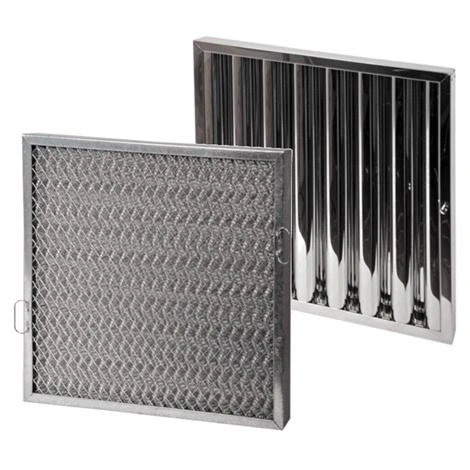
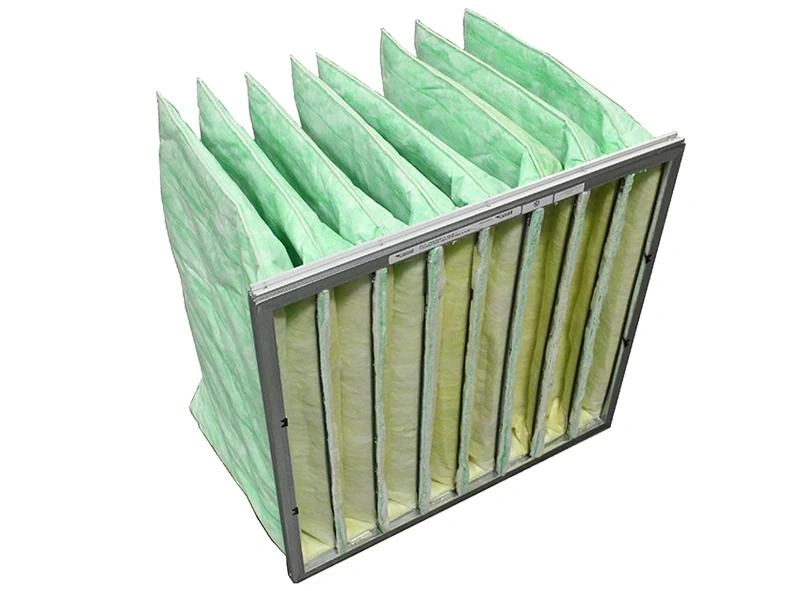
4. Choose the appropriate anti-oil filter material
The core of the anti-oil filter is the performance of the filter material.
When purchasing, attention should be paid to the oil resistance, moisture resistance, dust holding capacity and long-term operating stability of the filter material. For high humidity or oil mist environments, it should also be confirmed whether the filter is prone to clogging or structural deformation under actual working conditions.
We cannot simply use "anti-oil pollution" as the only judgment criterion. The selection should also be based on the actual pollutant concentration and operating time.
5. Pay attention to the initial resistance of the filter
Food factory HVAC systems usually need to run for a long time, so the filter resistance will directly affect the fan energy consumption.
When selecting, the initial resistance, rated air volume and dust holding capacity of different products should be compared.
If the initial resistance of the filter is too high, even if the filtration efficiency is high, it may increase the energy consumption of the system. Therefore, products with reasonable resistance and long service life should be selected while meeting the filtration requirements.
6. Strengthen filter maintenance in high-humidity environments
Steam and water vapor generated during the food production process may cause the filter to become damp.
The filter should be checked regularly for moisture, deformation, contamination and clogging, and good drainage and ventilation conditions should be maintained in the filter installation area.
For high-humidity environments, the filter should be replaced in time according to the actual pressure difference and operating status to prevent the damp filter material from affecting the air quality of the system.
7. Combined filtration should be used in areas with serious oil pollution
If there is a higher concentration of oil mist in the production area, relying solely on ordinary primary filters may not be able to meet long-term operation requirements.
A solution that combines oil pollution pre-filtration, oil mist filtration and back-end air filtration can be used according to the characteristics of pollutants to gradually reduce the load of oil pollution and particulate matter.
For special pollutants, corresponding filtration or adsorption equipment should also be selected based on the actual composition.
8. What parameters need to be confirmed when purchasing?
When purchasing anti-oil air filters for the food industry, it is recommended to clarify:
Filtration grade, filtration efficiency, rated air volume, initial resistance, dust holding capacity, filter material type, anti-oil performance, moisture resistance, frame material, size and operating temperature.
For key areas of food production, materials, sealing methods and related testing requirements should also be confirmed according to corporate hygiene management requirements.
9. Consider air quality and operating costs
When purchasing anti-oil filters, you cannot just compare unit prices. Filter service life, replacement frequency, initial resistance, fan energy consumption and maintenance costs should be comprehensively considered.
Although the initial purchase cost of a filter with better oil resistance, low resistance and higher dust holding capacity may be higher, the long-term operating cost may be lower.
Conclusion
The selection of anti-oil pollution air filters in the food industry should be comprehensively determined based on oil mist concentration, humidity, dust type, design air volume and cleanliness requirements. By properly configuring anti-oil pre-filtration, medium-efficiency filtration and necessary HEPA high-efficiency filtration, the impact of oil pollution on the HVAC system and back-end filters can be reduced, while the service life of the filters can be extended.
For projects that require the selection, customization and bulk purchase of oil-proof air filters for food production workshops, Jiangsu Yueboyang Purification Equipment Co., Ltd. can make technical selections based on the production process, oil mist and dust characteristics, design air volume and equipment size, and provide products such as primary-efficiency, medium-efficiency, high-efficiency, HEPA and activated carbon filters. It can also be equipped with clean air supply outlets, FFU fan filter units, regulating air valves and high-tightness air valves, providing complete air purification product support for food, beverages and other clean production workshops.


