
Clean room air filtration systems are an important part of environmental control in pharmaceutical production. According to the requirements of different cleanliness levels, it is necessary to reasonably configure primary effect filter, medium effect filter, High-efficiency filters (HEPA) and terminal air supply equipment to ensure that the clean room meets the specified air cleanliness standards.
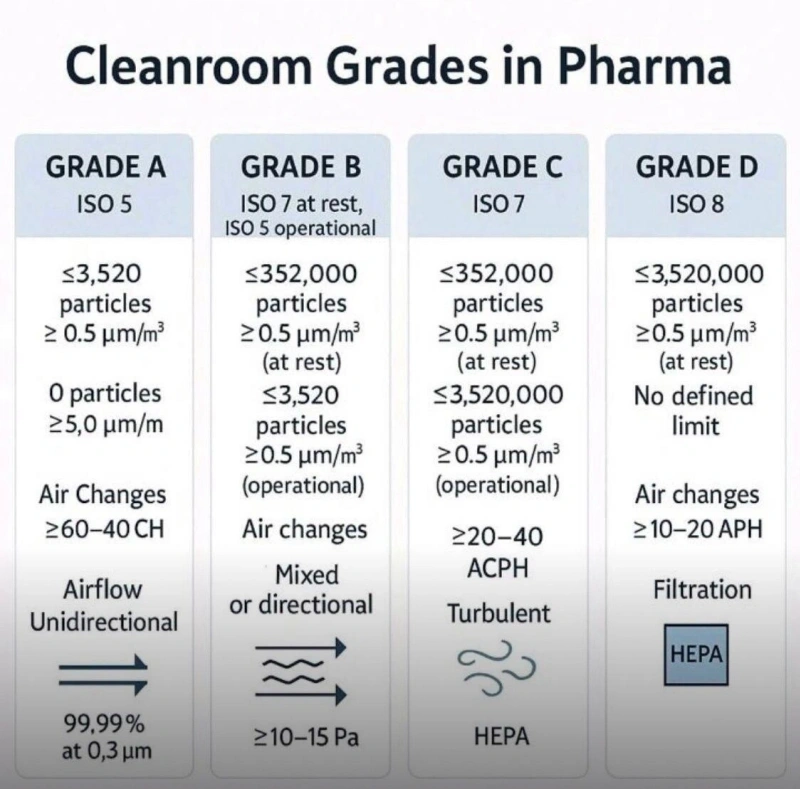
Pharmaceutical clean room grades and air filtration requirements
Pharmaceutical clean rooms are usually divided into clean rooms based on EU GMP, ISO 14644-1 and other standards. Different levels of clean rooms have different requirements for the number of suspended particles in the air, air flow organization methods and filtration efficiency.
Class A clean area - key aseptic operation area
Class A clean area is the area with the highest cleanliness requirements in pharmaceutical production and is mainly used in:
Aseptic filling
Aseptic product transfer
Open container operations
Key production steps for sterile dosage forms
Class A areas require the highest level of air pollution control.
Recommended air filtration solutions:
Primary filter: filters large particles of dust and protects back-end filtration equipment
Medium-efficiency filter: reduces the particle load entering the high-efficiency filter
H13/H14 level HE PA high-efficiency filter: as terminal filtration
Laminar air supply system or FFU fan filter unit
HEPA filters are usually installed in the top air supply unit, laminar flow hood or FFU equipment of the clean room to provide high cleanliness unidirectional airflow for critical areas.
Class B clean area - background environment of Class A area
Class B clean area is usually used as the background environment of Class A aseptic operating area. It needs to maintain stable cleanliness and prevent external contamination from entering key production areas.
Recommended filter configuration:
G4 primary filter
F7/F8 medium filter
F9 high efficiency pre-filter
H13/H14 HEPA filter
At the same time, the HVAC system needs to ensure sufficient air changes and control the spread of pollution through reasonable pressure difference design.
Class C and D clean areas - controlled production areas
Class C and D clean areas are mainly used for:
Medicine liquid configuration
Equipment operation area
Raw material handling
< p>Packaging area
Non-sterile pharmaceutical production
Compared with level A and B areas, level C and D areas have lower air cleanliness requirements, but they still need to effectively control air particle pollution.
Common filtration configurations:
Primary filter: filtering large particles of dust
Medium-efficiency filter: improving air filtration efficiency
Fine filter: further reducing particle concentration
For Class C clean areas, HEPA filtration can be added as terminal filtration according to production process requirements.
D-level areas mainly carry out basic environmental control, but a reliable air filtration system is still needed to ensure a stable production environment.
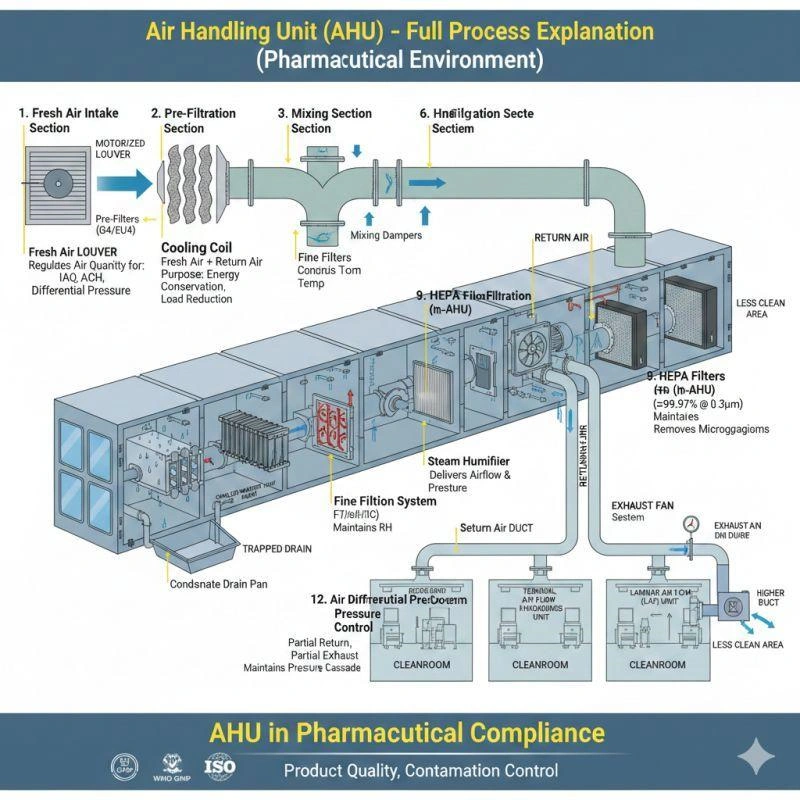
Common air filtration system configurations in pharmaceutical clean rooms
A complete pharmaceutical clean room HVAC air filtration system usually adopts a multi-stage filtration structure.
1. Primary filter
Primary filter is usually installed at the fresh air inlet or return air section of the air conditioning unit (AHU).
Main functions:
Remove large particles of dust in the air
Protect back-end filters
Prolong the service life of HEPA filters
Reduce HVAC system maintenance costs
Common products include:
Plate primary filter
Pleated filter
Cleanable filter
2. Medium and fine filters
Medium-efficiency filter is used to further filter particulate matter in the air and provide protection for the HEPA high-efficiency filter.
Main advantages:
Improve overall filtration efficiency
Reduce HEPA filter load
Maintain stable system operation
Bag filters and V-type filters are widely used in pharmaceutical HVAC systems due to their large dust holding capacity and low resistance.
3. HEPA high-efficiency filter
HEPA filter is the core equipment of the pharmaceutical clean room air filtration system.
Common grades:
H13 HEPA filter: MPPS filtration efficiency ≥99.95%
H14 HEPA filter: MPPS filtration efficiency ≥99.995%
HEPA filters are usually installed at:
Clean room air supply ceiling
FFU fan filter unit
High-efficiency air supply outlet
Laminar flow equipment
For sterile pharmaceutical production areas, H14-level HEPA filters are usually used to meet higher-level pollution control requirements.
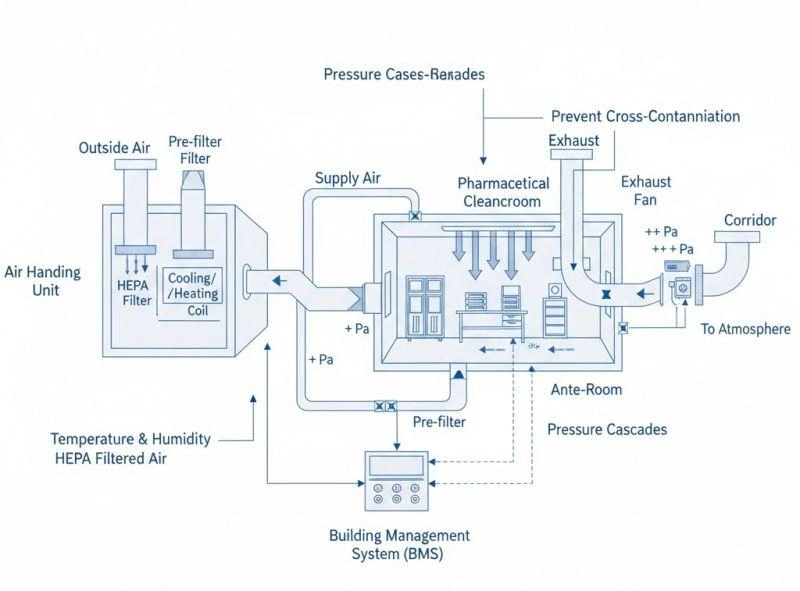
Summary
The clean room air filtration system is a core component of the production environment control in the pharmaceutical industry. Pharmaceutical workshops need to scientifically match primary-efficiency filters, medium-efficiency filters, HEPA high-efficiency filters and terminal air supply devices according to different cleanliness level specifications to intercept dust, microorganisms and particulate matter layer by layer to ensure that the clean room air quality is stable and meets pharmacopoeia cleanliness standards. Boyang Purification is deeply involved in the field of pharmaceutical purification supporting equipment. It can plan a complete gradient filtration configuration plan based on the clean zoning of the pharmaceutical workshop, the number of air changes, and the working conditions. From front-end pre-filtration to end-end high-efficiency purification, one-stop equipment is provided to help pharmaceutical companies stabilize a clean production environment, avoid cross-contamination, and ensure compliance and safety throughout the entire pharmaceutical production process.


