
Air filters are an indispensable core component in heating, ventilation and air conditioning (HVAC) systems and clean room air purification systems. Depending on the filtration efficiency and usage location, air filters are usually divided into primary filters, medium-efficiency filters and high-efficiency (HEPA) filters. Different types are suitable for different air purification needs.
1. Primary filter
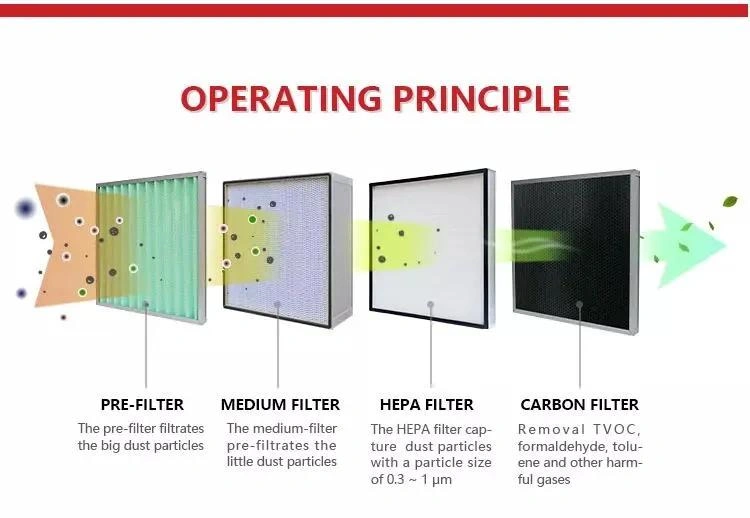
The primary filter is the first line of defense of the air filtration system. It is mainly used to intercept large particle pollutants in the air, such as dust, hair, fibers and pollen. It can effectively protect the back-end filter and extend its service life.
Filter level: G1~G4 or ISO Coarse
Applicable scenarios: commercial buildings, factories, shopping malls, office buildings and HVAC fresh air systems.
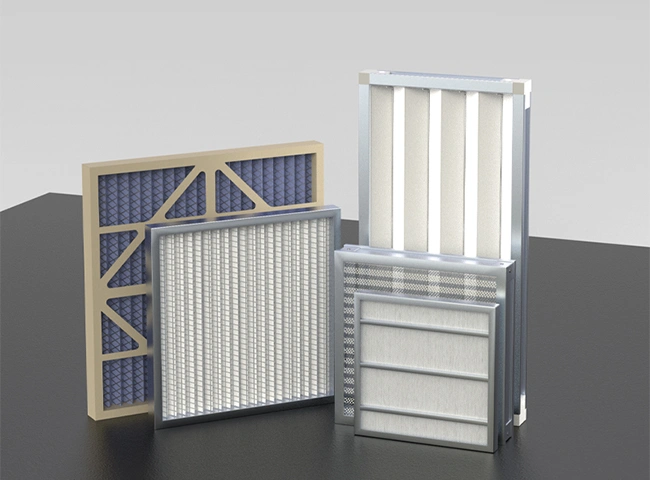
2. Medium Filter
Medium filter is mainly used to filter finer particles and can be used as a pre-filtration device before the high-efficiency filter to effectively reduce the load of the HEPA filter and improve the operating efficiency of the entire system.
Filter level: M5~F9 or ISO ePM10 / ePM2.5
Applicable scenarios: hospitals, laboratories, pharmaceutical factories, electronics factories and various industrial ventilation systems.
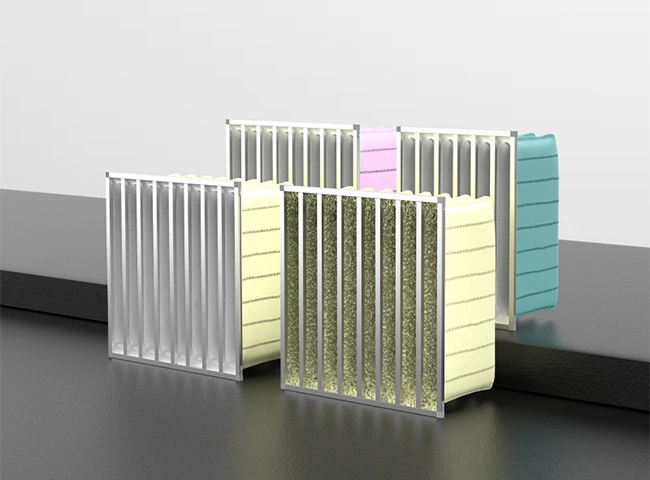
3. High-efficiency filter
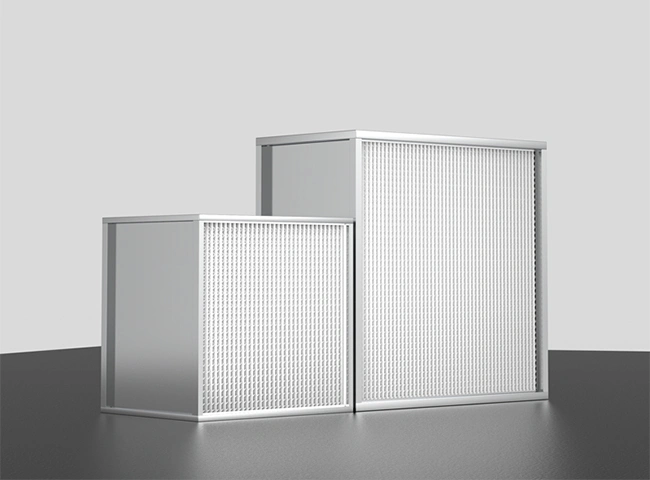
High-efficiency filter can filter extremely fine particles, bacteria and aerosols, and is the most critical filtration equipment in clean rooms and high-clean environments.
Filter level: H13~U15 (EN1822 standard)
Applicable scenarios: semiconductor manufacturing, biopharmaceuticals, hospital operating rooms, food processing, laboratories and various clean rooms.
What is the difference between primary filter and HEPA filter?
| Comparison project | Primary filter | HEPA high efficiency filter |
|---|---|---|
| Filter objects | Large particles of dust and hair | Fine particles, bacteria, aerosols |
| Filtration efficiency | Low | Extremely high |
| Resistance | Low | Higher |
| Replacement cost | Lower | Higher |
| Installation location | First layer of filtration | Final filtration |
It should be noted that the primary filter cannot replace the HEPA filter, and if the HEPA filter is not protected by the primary filter, its service life will be significantly shortened.
How to choose a suitable air filter?
The selection of air filters should take into account cleanliness level requirements, air flow, system resistance, energy consumption and maintenance costs. For most HVAC systems, a multi-stage filtration solution is recommended:
Primary filter → Medium-efficiency filter → High-efficiency (HEPA) filter
This combination can effectively improve filtration efficiency, extend the service life of the high-efficiency filter, and reduce overall operating costs.
Conclusion
Understanding the characteristics of different types of air filters will help to design a more efficient and safe air purification system. Whether it is commercial buildings, industrial plants, or clean environments such as hospitals, pharmaceuticals, electronic semiconductors, etc., reasonable configuration of primary, medium and high-efficiency filters can effectively improve air quality, ensure stable operation of equipment, and achieve lower maintenance costs.


