
Rational selection of clean room equipment plays an important role in maintaining stable environmental conditions, controlling particulate matter in the air, and ensuring product quality. Whether in pharmaceutical production, semiconductor manufacturing, medical facilities, laboratories or food processing industries, every piece of equipment in a cleanroom HVAC air system needs to be properly designed and matched.
A complete clean room air system usually includes air filter, FFU fan filter unit, Air diffuser and Air damper and other core equipment. This article will introduce the technical parameters and selection points that need to be focused on during the procurement of clean room equipment, helping engineers and procurement personnel improve the efficiency of equipment selection.
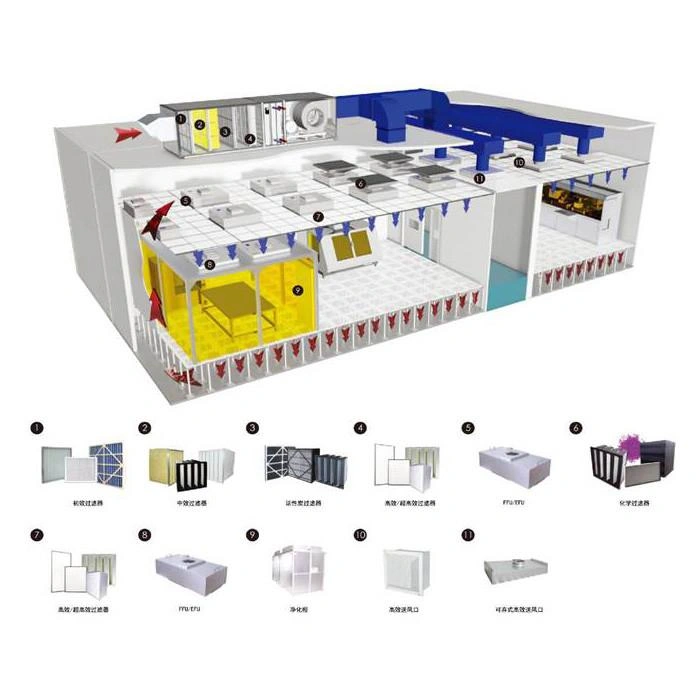
1. Clean room air filter purchase list
The air filter is the core component of the clean room air purification system. It is mainly used to filter particles in the air and ensure that the clean room reaches the specified clean level.
When purchasing a cleanroom filter, you need to confirm the following parameters:
Filter efficiency grade, such as G4, F7, F8, H13, H14, U15 or ULPA Grade
Filter size and installation method
Rated air volume
Initial and final resistance
Filter material type, including fiberglass or synthetic fiber materials
Outer frame material, such as aluminum frame, galvanized steel frame, stainless steel frame
Sealing method and gasket material
Temperature resistance and moisture resistance
Whether a scanning leak detection test report is provided
Is it consistent Standards such as EN1822, ISO 29463
For high-level clean room applications, such as semiconductor, pharmaceutical and biological laboratories, HEPA or ULPA high-efficiency filters that have been individually leak-tested are usually required to ensure stable and reliable filtration performance.
2. FFU fan filter unit purchase list
An air purification equipment integrating a fan and filter, which is widely used in semiconductor clean workshops, pharmaceutical workshops and modular clean room systems.
When purchasing FFU, you need to pay attention to the following technical parameters:
FFU size and installation specifications
Air volume and outlet wind speed
Static pressure capacity
Fan motor type, such as AC motor or EC Energy-saving motor
Power consumption
Noise level
HEPA or ULPA filter matching requirements
Control method and communication function
Wind speed adjustment ability
Convenience of filter replacement and maintenance
Box material and surface treatment process
FFU using EC energy-saving motor It can effectively reduce long-term operation energy consumption while maintaining stable and uniform clean room air flow organization.
3. Purchasing list for clean room air outlets
The air diffuser is responsible for delivering filtered clean air evenly into the clean room. Reasonable air supply design can reduce air flow dead corners and improve the air control effect of clean rooms.
When purchasing clean room air outlets, you need to confirm:
Air outlet type and structural design
Rated air supply volume
Panel size and interface size
Pressure loss
Material selection
Surface treatment requirements
Whether it is compatible HEPA high-efficiency filter
Whether it supports air volume adjustment
Installation method
Cleaning and maintenance requirements
For high-demand environments such as operating rooms and pharmaceutical clean areas, high-quality clean room air supply vents can help achieve more stable air flow control and reduce air turbulence.
4. Clean room damper purchase list
The damper is an important device in the clean room HVAC system for regulating air volume, controlling pressure balance and achieving system isolation.
When purchasing a damper, you need to confirm the following:
Air valve types, such as regulating valves, sealing valves, VAV air valves, etc.
Air leakage level
Valve plate structure and sealing performance
Valve body and blade material
Manual or automatic control method
Actuator Type and working voltage
Communication protocol compatibility
Pressure performance
Temperature resistance
Installation requirements
For pharmaceuticals, biosafety laboratories and clean experimental environments, it is usually necessary to choose low air leakage or high sealing dampers to ensure the accuracy of pressure control in clean areas.
5. Confirm system compatibility before purchasing
Clean room equipment cannot be selected individually. All equipment must be matched as a complete air treatment system.
Confirmation is required before purchasing:
HVAC system design requirements
Clean room grade requirements
Air volume calculation results
Pressure differential control requirements
Equipment size and installation Installation space
Control system compatibility
Later maintenance requirements
Spare parts supply capacity
Reasonable system matching can avoid modification problems during the installation process and improve the stability of the long-term operation of the clean room.
6. Questions to confirm with the clean room equipment supplier
Before purchasing clean room equipment, it is recommended to obtain complete technical information from the supplier, including:
Product specifications
Technical data sheet
CAD installation drawings
Performance test data
Test report
Product quality certification
Installation Instructions
Maintenance Guide
Warranty Information
Production and Delivery Time
OEM/ODM Customization Capabilities
Choosing a clean room equipment manufacturer with rich experience can not only ensure the match between products, but also obtain professional technical support.


