
HVAC (heating, ventilation and air conditioning) systems are one of the most energy-consuming components in cleanroom operations, typically accounting for 40% to 60% of the energy consumption of the entire cleanroom. Air handling units, fans, high-efficiency filters, refrigeration equipment, and temperature and humidity control systems need to operate continuously for a long time, so operating costs are always the focus of enterprises.
For industries such as pharmaceuticals, semiconductors, medical, laboratories, and electronic manufacturing, how to reduce HVAC system energy consumption and improve operating efficiency while meeting cleanliness, temperature, humidity, and pressure differential requirements has become an important issue in clean room design and operation.
This article will introduce several effective methods to reduce the operating costs of clean room HVAC, helping companies achieve energy conservation and consumption reduction while ensuring the stable operation of a clean environment.
1. Optimize the air supply volume and the number of air changes
The air supply volume in the clean room directly determines the fan energy consumption and air conditioning load. The larger the air supply volume, the higher the power consumption of the fan, and the operating costs of the cooling, heating and filtration systems will also increase.
To reduce operating costs, you can start from the following aspects:
Reasonably determine the air supply volume according to the clean room grade
Avoid energy waste caused by excessive air volume design
Adopt VAV variable air volume control system in applicable areas
Adjust the number of air changes according to the production process
Maintain a reasonable room pressure difference
For areas with different cleanliness levels, zoning control can be used to adjust the air volume according to actual needs to ensure cleanliness while reducing energy consumption.
2. Choose high-efficiency and low-resistance air filters
Air filters not only determine the air quality of the clean room, but also directly affect the energy consumption of the HVAC system. The higher the filter resistance, the more power the fan needs to consume to maintain the same air volume.
It is recommended to pay attention to when purchasing filters:
Choose filtration efficiency that meets actual needs
Prioritize low-resistance design products
Use high-quality filter materials to improve filtration efficiency and service life
Choose appropriate specifications based on system air volume
Replace filters promptly according to pressure difference
Although the initial purchase cost of high-quality filters is higher, they can effectively reduce long-term operating costs due to lower resistance and longer life.
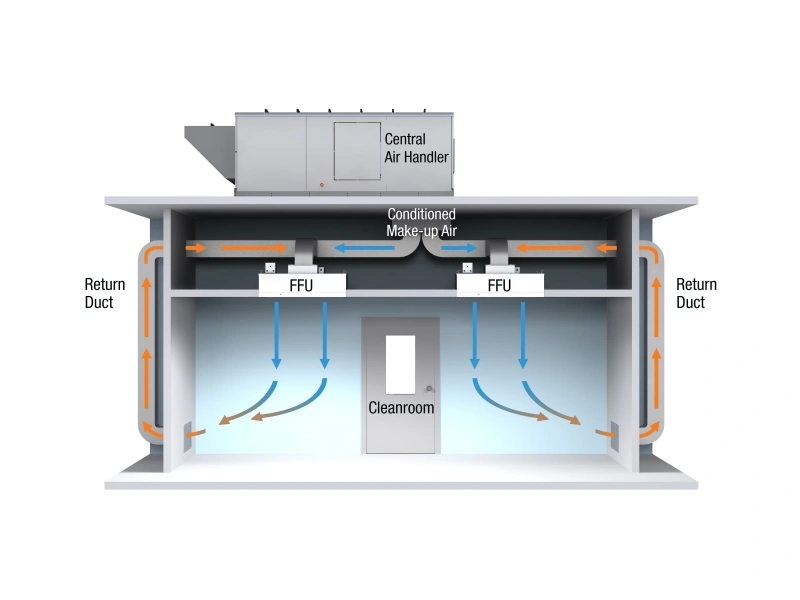
3. Use high-efficiency and energy-saving FFU system
FFU fan filter unit is widely used in semiconductor, electronics and modular clean rooms, and its operating efficiency directly affects the overall energy consumption.
The following measures can be taken to reduce FFU operating costs:
Use EC energy-saving motors to replace traditional AC motors
Choose high-efficiency centrifugal fans
Configure intelligent speed control system
Automatically adjust wind speed according to actual load
Real-time monitoring of FFU operating status
FFUs using EC motors are usually more energy-efficient than traditional products and can significantly reduce power costs during long-term operation.
4. Regularly maintain filters and HVAC equipment
Inadequate maintenance not only affects clean room performance, but also increases system operating costs.
It is recommended to carry out the following maintenance work regularly:
Check the change of filter pressure difference
Replace the clogged filter in time
Clean the inside of the air handling unit
Check the operation of the fan and motor Status
Check the damper sealing performance
Calibrate the sensor and control system
For example, when the high-efficiency filter is clogged or the damper leaks, the fan requires more power to maintain the system air volume, resulting in a significant increase in energy consumption.
5. Optimize the design of air valve and air supply system
The air valve and air supply system directly affect the air flow organization and air distribution effect of the clean room.
Optimization measures include:
Adopt low air leakage and high sealing dampers
Improve the sealing performance of the dampers
Reasonably balance the air volume of each branch
Optimize the layout of the air supply outlets
Reduce turbulence and air flow dead corners
Reasonable air distribution can not only ensure the cleanliness of the clean room, but also reduce the air supply load of the air conditioning system and improve the overall operating efficiency.
6. Utilize energy recovery technology
For clean rooms that require a large amount of fresh air, energy recovery technology can effectively reduce the cooling and heating loads.
Common solutions include:
Heat recovery system
Full heat exchanger
Fresh air energy recovery device
High-efficiency heat exchange equipment
By recovering the hot and cold energy in the exhaust air, the energy consumption of the air conditioning system can be reduced, thereby reducing operating costs.
7. Regularly evaluate the operating performance of the HVAC system
Energy saving is not a one-time task, but a process of continuous optimization.
The following assessments are recommended on a regular basis:
HVAC energy consumption analysis
Air volume detection
Pressure difference test
Temperature and humidity calibration
Equipment efficiency assessment
Control system optimization
By continuously monitoring the operating status of the system, promptly discovering problems and making adjustments, we can effectively avoid energy waste and maintain long-term efficient operation of the HVAC system.
Conclusion
Reducing clean room HVAC operating costs requires comprehensive optimization from multiple aspects such as equipment selection, air filtration, air flow organization, intelligent control, and equipment maintenance.
By using low-resistance high-efficiency filters, energy-saving FFU, intelligent control systems, high-tightness dampers, and scientific maintenance and management measures, not only can energy consumption and operating costs be effectively reduced, but the stability and reliability of the clean room system can also be improved.
For companies that want to improve operational efficiency and reduce long-term costs, continuous optimization of HVAC systems is an important way to achieve energy conservation, consumption reduction and sustainable development.


