
In the pharmaceutical industry, air quality is directly related to drug quality, safety and GMP (Good Manufacturing Practice) compliance. Clean rooms not only need to control particles and microorganisms in the air, but also must maintain stable temperature, humidity, pressure difference, and air flow organization to ensure that the production environment continues to meet regulatory requirements.
A complete GMP pharmaceutical clean room air filtration system usually consists of air handling unit (AHU), multi-stage air filter, Air supply port, air valve and automatic control system. Proper system design can not only meet regulatory requirements, but also improve production efficiency, reduce energy consumption, and extend equipment service life.
This article will introduce the composition, design principles and selection points of the GMP pharmaceutical clean room air filtration system to help companies build a safe, stable and efficient clean production environment.
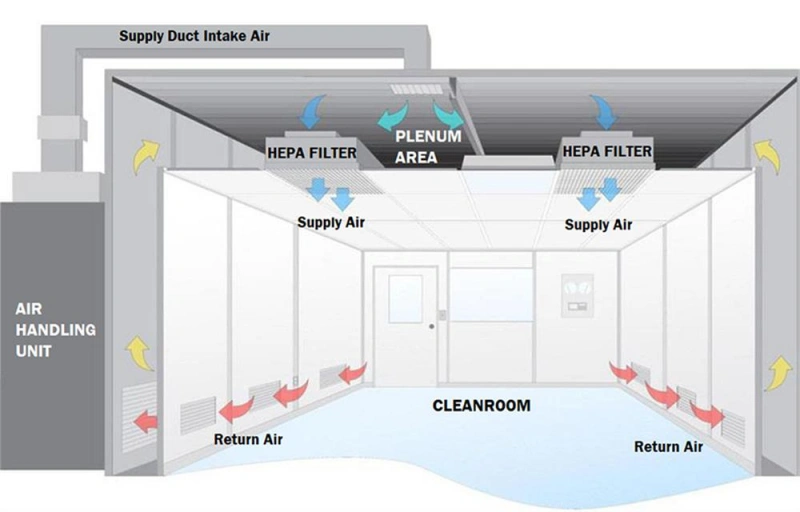
Why do GMP pharmaceutical clean rooms need high-efficiency air filtration systems?
Pharmaceutical production has extremely high requirements for air cleanliness. Dust, bacteria, mold spores and other pollutants in the air may cause product contamination, batch scrapping, and even affect patient medication safety.
High-performance air filtration systems can help businesses:
Meet the air cleanliness level requirements of GMP clean rooms
Control particulate matter and microbial contamination in the air
Ensure the sterile pharmaceutical production environment
Ensure the consistency of product quality
Prevent cross-contamination between different production areas
Prolong the service life of production equipment
Reduce maintenance costs and operating energy consumption
Especially in sterile preparations, vaccines, biopharmaceuticals, injections and drug packaging workshops, high-efficiency air filtration systems are important infrastructure to ensure production safety.
GMP clean room air filtration systems usually use three-stage filtration
In order to improve filtration efficiency and extend the service life of high-efficiency filters, pharmaceutical clean rooms usually adopt a three-stage filtration design.
First-level filtration: primary filter
Primary filter is mainly used to remove large particles of dust, fibers and impurities in the air.
Common filtering levels include:
G3
G4
ISO Coarse
Main functions:
Protect backend filters
Reduce maintenance frequency
Reduce operating costs
Secondary filtration: medium efficiency filter
Medium-efficiency filter is responsible for removing medium-sized particles, further reducing the particle load entering the high-efficiency filter.
Common grades include:
F7
F8
F9
ISO ePM1
Proper configuration of medium-efficiency filters can effectively extend the service life of HEPA filters.
Third-level filtration: HEPA high-efficiency filter
HEPA filter is the core equipment for clean room air purification.
Commonly used grades include:
H13 (filtration efficiency 99.95%)
H14 (filtration efficiency 99.995%)
HEPA filters can effectively filter particles of 0.3μm and above, and are widely used in the terminal air supply system of GMP clean rooms.
For Class A sterile areas or places with special high cleanliness requirements, ULPA ultra-high efficiency filters can also be used to achieve a higher level of air cleanliness.
The main components of the GMP air filtration system
A complete pharmaceutical clean room air treatment system usually includes:
Air handling unit (AHU)
Primary filter
Medium filter
HEPA filter
Clean air supply port
Return air port
Air volume regulating valve
High-tight air valve
Pressure differential monitoring system
Temperature and humidity control system
Building automation control system (BMS)
These devices work together to achieve stable air purification, air flow organization and environmental control.
Key points for purchasing air filters in the pharmaceutical industry
When purchasing GMP clean room air filters, you should focus on the following parameters:
Whether it complies with GMP specifications
Whether it complies with ISO 14644 clean room standard
Whether it meets the EN1822 high-efficiency filter standard
Filtration efficiency level
Initial resistance
Dust holding capacity
Filter material quality
Frame material
Sealing performance
Leak detection report
Service life
Choosing an experienced air filter manufacturer with stable quality can effectively ensure the long-term stable operation of the clean room and reduce subsequent maintenance costs.
Conclusion
GMP pharmaceutical clean room air filtration system is an important foundation for ensuring drug quality and production safety. Properly configured with primary-efficiency, medium-efficiency and HEPA high-efficiency filters, combined with scientific airflow organization design, high-tightness air valves, clean air supply outlets and intelligent HVAC control systems, it can effectively control air pollution, meet GMP specification requirements, and improve overall operating efficiency.
As the pharmaceutical industry's requirements for a clean environment continue to increase, choosing high-quality air filtration solutions can not only ensure product quality, but also reduce energy consumption and operating costs, providing strong support for companies to achieve long-term and stable development.


