
Whether it is sterile preparations, biopharmaceuticals, vaccine production or laboratory research and development, the selection, installation, testing and maintenance of HEPA filters directly affect the operating results and product quality of the clean room. This article will introduce in detail the application, selection principles, installation requirements and maintenance points of HEPA filters in pharmaceutical workshops, helping companies establish safe, stable and efficient air filtration systems.
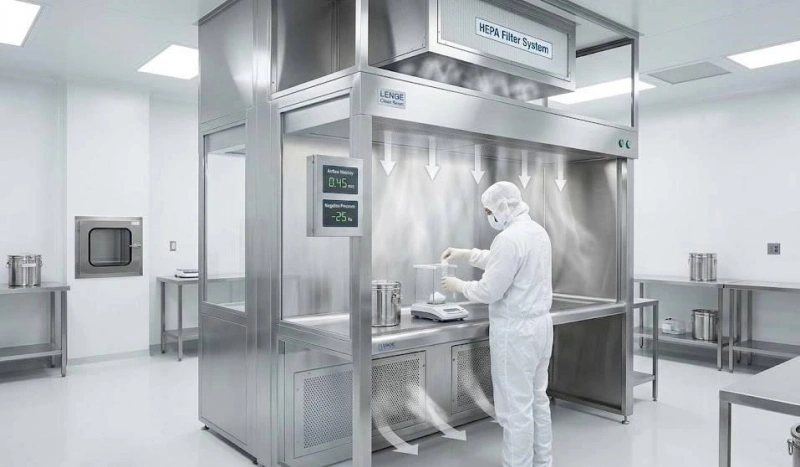
Why must HEPA filters be used in pharmaceutical workshops?
Pharmaceutical production has extremely high requirements for air cleanliness. Dust, bacteria, mold spores and other suspended particles in the air may contaminate drugs, affect product quality, and even cause the entire batch of products to be scrapped.
HEPA filters can help pharmaceutical companies:
Efficiently filter particles of 0.3μm and above.
Control microbial contamination in the air.
Meet GMP clean room air cleanliness requirements.
Prevent cross-contamination between different clean areas.
Provide stable clean air for aseptic production.
Improving the quality and consistency of pharmaceutical production.
Therefore, HEPA filters have become indispensable and important equipment in modern pharmaceutical clean rooms.
In what areas are HEPA filters mainly used?
HEPA filters are widely used in various clean production and auxiliary areas of pharmaceutical companies, including:
Sterile drug production workshop
Injection production workshop
Vaccine production workshop
Biopharmaceutical laboratory
GMP clean room
Class A and B clean areas
Aseptic filling area
Clean packaging workshop
Drug testing laboratory
Clean storage area
According to different cleanliness levels, HEPA filters with different filtration efficiencies can be selected.
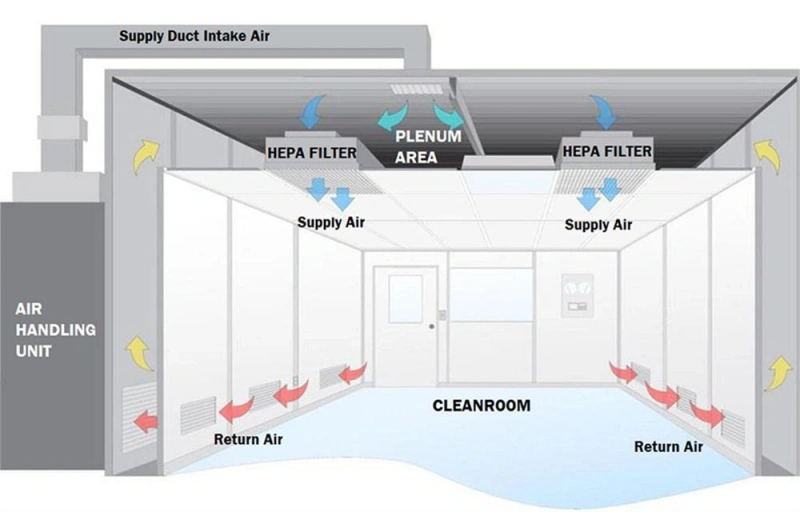
Common filtration levels of HEPA filters
According to the EN1822 standard, high-efficiency filters are mainly divided into the following levels:
H13 high-efficiency filter
Features:
Filtration efficiency ≥99.95%
Meet the application requirements of most pharmaceutical clean rooms
Widely used in the end air supply of HVAC systems
Suitable for:
GMP clean workshop
Pharmaceutical packaging workshop
Biological laboratory
General clean production area
H14 high efficiency filter
Features:
Filtration efficiency ≥99.995%
Higher air cleanliness
Tighter leakage control
Applicable to:
Aseptic production workshop
Class A clean area
Aseptic filling production line
Biosafety laboratory
For special high-clean environments, ULPA ultra-high-efficiency filters can also be used to achieve a higher level of air purification effect.
How HEPA filters work
HEPA filters do not simply rely on a "sieve" to intercept particles, but work together through a variety of filtration mechanisms, including:
Inertial collision
Interception effect
Diffusion effect
Gravity sedimentation
Van der Waals adsorption
These filtration mechanisms can effectively remove dust, bacteria, virus carriers and other suspended particles in the air, thereby ensuring clean room air quality.
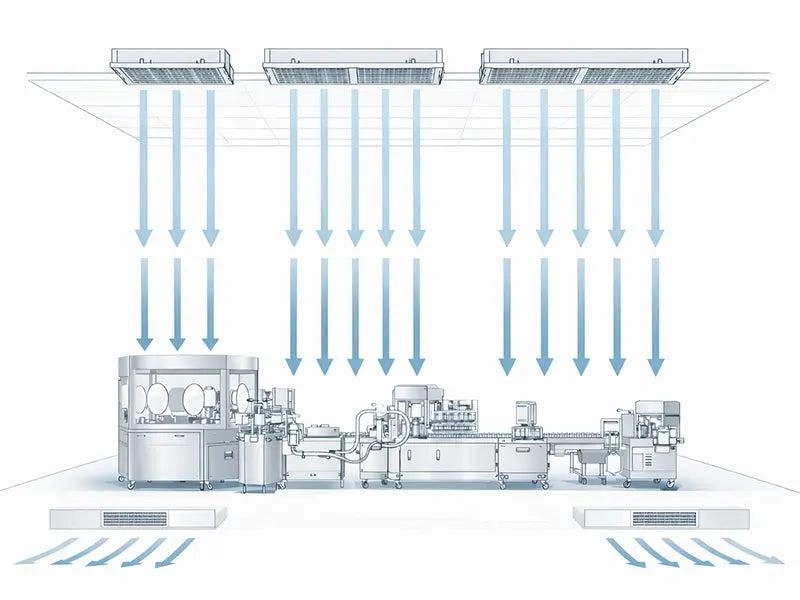
HEPA filter installation requirements
The installation quality of the high-efficiency filter directly determines the actual operating effect of the clean room, so the following requirements should be focused on during the installation process:
Ensure that the filter is installed in the correct direction.
Ensure a tight seal between the filter and the mounting frame.
Prevent air leakage from the frame.
Maintain uniform air supply.
Meet the design air volume requirements.
Carry out a leak test after installation.
In pharmaceutical clean rooms, HEPA filters are usually installed in high-efficiency air supply vents or FFU fan filter units to ensure that clean air is sent directly into the production area.
HEPA filter inspection and maintenance
In order to ensure that the filter continues to maintain optimal performance, a complete maintenance system should be established.
It is recommended to conduct the following inspections regularly:
Detect changes in filter pressure difference.
Perform PAO or DOP leak detection test.
Check the wind speed and air supply uniformity.
Regularly monitor the concentration of suspended particles in the clean room.
Replace the filter in time according to the pressure difference and usage.
Establish complete maintenance records.
Regulatory maintenance can not only ensure that the clean room continues to comply with GMP requirements, but also extend the overall service life of the HVAC system.
What parameters should you pay attention to when purchasing HEPA filters?
When purchasing HEPA filters, you should focus on confirming the following technical parameters:
Whether it meets the EN1822 standard
Whether it meets the ISO 14644 clean room requirements
Filtration efficiency level (H13 or H14)
Initial resistance
Filter material type
Frame material
Leak detection test report
Product consistency
Service life
At the same time, priority should be given to Air filter manufacturer to ensure product quality and long-term stable operation.
Conclusion
HEPA filter is the core component of the pharmaceutical clean room air purification system, and is also an important equipment to ensure drug quality and production safety. Through reasonable selection of H13 or H14 high-efficiency filters, combined with scientific installation, testing and maintenance management, air pollution can be effectively controlled and meet the requirements of international standards such as GMP and ISO 14644.
As the pharmaceutical industry's requirements for a clean environment continue to increase, high-quality HEPA filters and complete HVAC air filtration solutions will become an important foundation for ensuring the company's continued and stable production and improving product competitiveness.


