
The filtration efficiency of air filters is directly related to clean rooms, HVAC systems and indoor air quality. When purchasing, you should not just look at the product name or the "high efficiency filtration" marked by the supplier, but should make a judgment based on the filtration grade, test standards, test particle size and actual usage conditions.
1. First, clarify the filtration level required for the project
Different application scenarios have different requirements for filtration efficiency. Ordinary commercial buildings usually use primary and medium-efficiency filtration, while scenes such as clean rooms, hospitals, pharmaceuticals, and electronic manufacturing may require HEPA or even higher-level filters.
Before purchasing, the filtration level should be determined based on the design cleanliness and system requirements, such as H13, H14, etc., rather than simply pursuing higher efficiency. Too high a filtration level may also bring greater resistance and operating energy consumption.
2. Confirm the test standards corresponding to the filtration efficiency
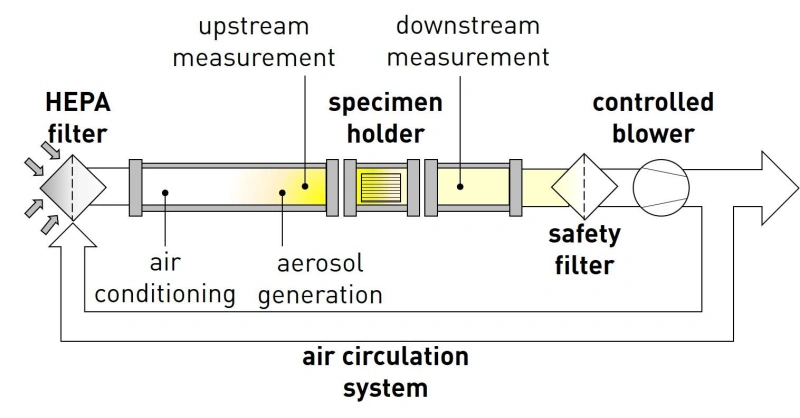
The key to judging whether the filtration efficiency is qualified is to confirm what test standards the supplier adopts.
Different standards may have differences in testing methods, test particle size and grade classification. Therefore, products with the same "99.97%" label may not necessarily have exactly the same performance if the test conditions are different.
The filtration level, test method, test particle size and applicable standards should be clearly stated in the procurement technical specifications to avoid simple comparisons between different standards.
3. Don’t just look at the filtration efficiency percentage
The higher the filtration efficiency, it does not mean that the filter must be suitable for the system.
In addition to filtration efficiency, you also need to pay attention to:
Rated air volume
Initial resistance
Final resistance
Filter size
Service life
For example, if the filter efficiency meets the requirements, but the initial resistance is too high, it may lead to insufficient air volume in the system and increased fan energy consumption, ultimately affecting the operating effect of the entire air purification system.
IV. Check product test reports
When purchasing HEPA, high-efficiency filters and other products, suppliers should be required to provide corresponding product test reports.
The test report should be able to correspond to the specific product model or batch, and clarify the filtering level, test conditions, test results and other information. For important clean areas, the supplier can also be asked to provide unit-by-unit inspection or scanning leak detection reports.
Do not rely solely on supplier promotional materials or product labels as the basis for final acceptance.
5. Pay attention to the integrity and leakage of the filter
Qualified filtration efficiency does not mean that the entire filter must not leak.
For HEPA filters, you also need to pay attention to the integrity of the filter material, frame, sealant and sealing strips. If the sealing is poor after installation, even if the filter material itself has high filtration efficiency, it may cause unfiltered air to bypass the filter material and enter the clean area.
Therefore, high-level clean places should pay attention to both filtration efficiency and overall sealing performance.
6. Judgment based on actual air volume
The filtration efficiency obtained in laboratory testing does not fully represent the on-site operation effect. In actual use, the filter needs to maintain stable performance under the design air volume.
When purchasing, the filtration efficiency, rated air volume and resistance should be evaluated as a whole, and whether the performance of the filter matches the existing fan, FFU or air conditioning box should be confirmed.
7. Establish clear acceptance standards
For bulk purchases, it is recommended to agree in advance on the contract or technical specifications about the filtration level, test standards, inspection items, allowable deviations and acceptance methods.
After the product arrives, the product label, specifications and test reports should be checked; for key items, on-site leak detection or performance testing can also be performed to avoid judging whether the product is qualified based on appearance alone.
Conclusion
To determine whether the air filter filtration efficiency meets the requirements, you cannot just look at a percentage, but should comprehensively consider the filtration grade, test standards, test particle size, rated air volume, resistance, sealing performance and test reports. For B-end projects, clarifying technical parameters and acceptance criteria before purchasing is an important measure to ensure that filter performance meets design requirements.
For projects that require air filter selection, customization and bulk purchase, Jiangsu Yueboyang Purification Equipment Co., Ltd. can conduct product matching and technical confirmation based on the customer's cleanliness level, design air volume, equipment size and usage environment, and provide initial, medium, high and HEPA filters and other products. At the same time, it can be equipped with FFU fan filter unit, high-efficiency air supply outlet and other clean air equipment, providing complete product supporting support for clean rooms and HVAC air purification systems.


