
The filter material of the air filter directly affects filtration efficiency, dust holding capacity, resistance, service life and operating costs. Different filters use different filter materials, and their applicable scenarios are also obviously different. When purchasing, you should not just look at the filtration grade, but also choose the appropriate filter material based on the air environment, air volume, resistance and usage requirements.
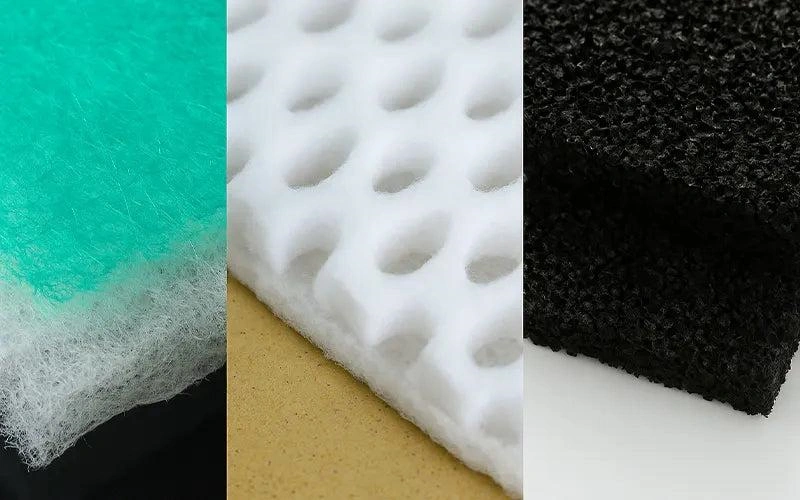
1. What are the common air filter materials?
Currently commonly used filter materials for air filters mainly include the following categories:
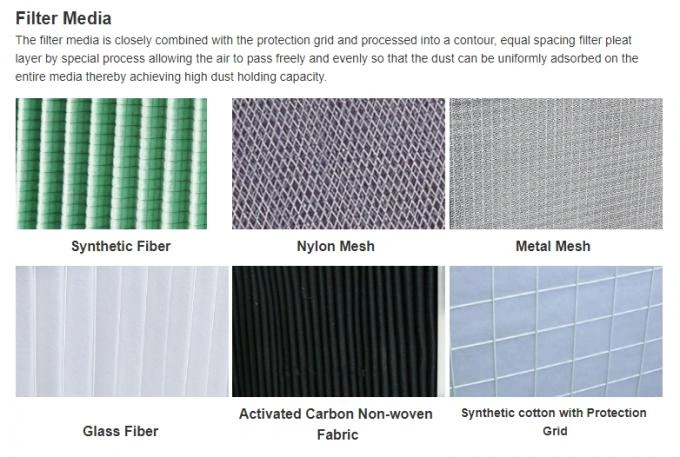
1. Synthetic fiber filter materials
Synthetic fibers have the characteristics of moderate cost, good moisture resistance, and stable structure. They are often used in primary-efficiency and some medium-efficiency filters.
The advantage is that it has strong adaptability and is suitable for general HVAC systems and industrial air pre-filtration.
2. Glass fiber filter material
Glass fiber has good filtration performance and high dust holding capacity, and is widely used in high-efficiency filters and HEPA filters.
For clean rooms, pharmaceuticals, medical, electronic manufacturing and other scenes that require high air cleanliness, fiberglass is a common choice.
3. PP and other high-performance fiber filter materials
PP and other high-performance fibers are resistant to moisture and chemical corrosion and can be used in some industrial filtration and special environments.
The specific selection should be confirmed based on temperature, humidity and the nature of pollutants in the air.
4. Activated carbon filter material
Activated carbon is mainly used to absorb gaseous pollutants and odors, such as some VOCs, odors and organic gases.
It should be noted that Activated carbon filter has a different working principle from ordinary particulate filters, and its full performance cannot be evaluated by pure particulate filtration efficiency.
5. High-performance membrane filter materials such as PTFE
PTFE membrane has high filtration efficiency and good chemical stability, and can be used in scenarios with high requirements for cleanliness, chemical resistance or special working conditions.
When purchasing, you should focus on confirming the membrane structure, filtration grade, resistance and actual working conditions.
2. How to choose filter media when purchasing?
1. Select according to the filtration level
First determine the primary efficiency, medium efficiency, high efficiency or HEPA level according to the system requirements, and then select the appropriate filter material.
You cannot blindly choose high-performance filter materials in pursuit of higher filtration efficiency, otherwise it may increase the initial resistance and purchase costs.
2. Select according to the use environment
For high-humidity environments, you should focus on the moisture resistance of the filter material; for high-temperature or corrosive environments, you need to confirm the temperature resistance and corrosion resistance of the filter material and other components.
Industries such as food, pharmaceutical, hospital and electronic manufacturing also need to select materials based on specific cleanliness requirements.
3. Selection based on air volume and resistance
The structure of the filter material will directly affect the air resistance. Under the same filtration level, different filter materials, fiber structures and filter areas may produce different initial resistance.
When purchasing, the rated air volume and initial resistance should be confirmed at the same time to ensure that the filter will not affect the designed air volume of the original HVAC system.
4. Select according to the type of pollutants
If the main pollutants are dust and particulate matter, the particle filtration capacity and dust holding capacity should be mainly considered; if there are odors or gaseous pollutants, gas adsorption materials such as activated carbon may be needed.
For special pollutants such as oil mist and paint mist, filter materials with corresponding tolerance should also be selected.
5. Comprehensive consideration of service life and cost
When purchasing air filters, you cannot just compare unit prices. The dust holding capacity of the filter material, the resistance growth rate and the replacement cycle will all affect the long-term operating costs.
Therefore, a comprehensive evaluation should be made from three aspects: procurement cost + operating energy consumption + replacement cycle.
3. What parameters should be confirmed when purchasing?
In addition to the type of filter material, it is also recommended to specify in the procurement technical specifications:
Filtration level
Rated air volume
Initial resistance
Final resistance
Filtration efficiency
Filter material structure
Frame material
Sealing method
Use of temperature and humidity
Testing standards
Factory inspection report
For non-standard products, dimensions, materials and technical drawings should be confirmed before mass production.
Conclusion
There is no absolute "best" air filter material, there are only choices that match the use environment and system requirements. When purchasing, filtration efficiency, resistance, dust holding capacity, moisture and temperature resistance, pollutant types, service life and overall cost should be comprehensively considered, and avoid judging products solely by price or filtration grade.
For projects that require air filter selection, customization and bulk purchase, Jiangsu Yueboyang Purification Equipment Co., Ltd. can match filter materials and products according to the customer's usage environment, design air volume, filtration level and equipment size, and provide primary-efficiency, medium-efficiency, high-efficiency, HEPA and activated carbon air filtration products. At the same time, it can be equipped with FFU fan filter units, high-efficiency air supply vents and other clean air equipment, providing complete product supporting support for clean rooms, HVAC systems and industrial air purification projects.


