

It is mainly used for high-end air purification, exhaust gas purification, high-purity water treatment, wastewater treatment, sewage treatment, aquarium, desulfurization, denitrification, and can effectively remove impurities and pollutants in gases and liquids, as well as various gas separation and purification. It can also be widely used in the adsorption recovery of various low-boiling point substances, deodorization and degreasing, etc.
Honeycomb activated carbon has the characteristics of large specific surface area, microporous structure, high adsorption capacity and high surface activated carbon, and is widely used in air pollution control. The honeycomb activated carbon adsorption method is used, that is, the exhaust gas is in contact with porous activated carbon with a large surface, and the pollutants in the exhaust gas are adsorbed and decomposed, thus achieving a purification effect.
The pollutants that can be removed to varying degrees by honeycomb activated carbon include: carbon oxide, carbon tetrachloride, chlorine, benzene, diformaldehyde, acetone, ethanol, ether, methanol, acetic acid, ethyl ester, styrene, phosgene, malodorous gases, etc. Modified honeycomb activated carbon impregnated with chemical reagents can remove: acid mist, alkali mist amine, mercaptan, sulfur dichloride, hydrogen sulfide, ammonia, mercury, carbon monochloride, dioxins, etc.
This product is widely used in various organic waste gas purification systems with low concentration and large air volume. The waste gas to be treated can fully contact the activated carbon when passing through the square holes of the honeycomb activated carbon. The adsorption efficiency can reach 67.16%, the wind resistance coefficient is small, and it has excellent adsorption, desorption and gas dynamic properties. It can be widely used to purify and treat organic gases such as toluene, xylene, benzene, phenols, lipids, alcohols, aldehydes and other organic gases, malodorous gases and trace metals. Environmental protection equipment using honeycomb activated carbon has high exhaust gas treatment and purification efficiency, small adsorption bed volume, and low equipment energy consumption, which can reduce construction and operating costs. The purified gas fully meets environmental protection emission requirements.
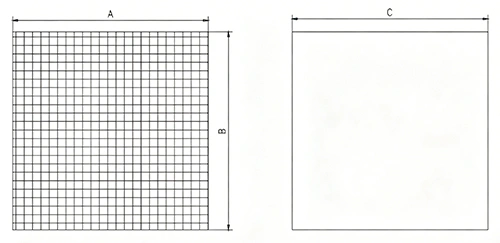
| Project | Ordinary honeycomb charcoal | Water-resistant honeycomb carbon |
| Specification A*B*C (mm) | 100*100*100, 100*100*50, 50*50*100, 50*50*50 | |
| Iodine adsorption value (mg/g) | >950 | >900 |
| Specific surface area (m2/g) | 1050 | 950 |
| Carbon tetrachloride adsorption rate (%) | >65 | >60 |
| Benzene adsorption rate (%) | >45 | >40 |
| Forward compressive strength (Mpa) | >0.7 | >0.8 |
| Side compressive strength ( Mpa) | >0.3 | >0.3 |
| Moisture content (9%) | <5 | <2 |
| Pore density (pore L/in2) | 50-300 | |
| Bulk density (g/ml) | 0.3-0.55 | |
| Using temperature (°℃) | <400 | |
| Desorption temperature (℃) | <120 | |
| Empty tower wind speed (m/s) | 0.8 (bed thickness: 600mm resistance: 490Pa) | |
| Water resistance | X | V |
In gas pollution control, conventional granular activated carbon can encounter high resistance and uneven airflow distribution. Honeycomb activated carbon uses an optimized structure to distribute gas evenly through its channels, maintaining low pressure drop while improving adsorption efficiency. It is particularly suitable for air treatment systems operating continuously at high airflow rates.
It is especially suitable for projects sensitive to airflow resistance and with demanding energy-efficiency requirements, helping reduce system operating costs while maintaining purification performance.
Regular channels provide passages for airflow. Select cell density, channel length, and face velocity together, checking pressure drop and gas contact time.
Proper channel configuration and installation area help control pressure loss as air passes through. Check pressure drop at actual airflow and the fan’s available pressure.
Adsorbs VOCs and odors compatible with the selected carbon media. Performance depends on pollutant composition, concentration, temperature, humidity, and remaining adsorption capacity.
Proper block arrangement and sealed installation help reduce airflow bypass. Check airflow distribution inside the equipment to avoid excessive local velocity.
Confirm compressive strength and dust-shedding requirements according to transport, installation, and operating conditions. For continuous operation, check block retention and access for maintenance inspections.
Carbon specifications such as iodine value can be selected according to project requirements. Iodine value supports comparison, but selection should also consider adsorption performance data for the target gas.
Multiple blocks can be combined to match system airflow. Calculate installation area, carbon quantity, and contact time together to avoid reducing treatment performance as airflow increases.
Can serve as an adsorption treatment unit following an operating-condition assessment. Provide VOC composition, concentration, airflow, and operating hours to calculate carbon quantity and replacement intervals.
Used for solvent vapor adsorption after pretreatment. Confirm paint mist and particulate removal upstream to reduce channel blockage and carbon contamination.
Suitable for process exhaust gases compatible with the selected carbon media. Specify chemicals, concentrations, temperature, and humidity; assess adsorption suitability for mixed gases.
Can serve as an adsorption stage in odor collection systems. Select suitable media for specific pollutants, such as hydrogen sulfide and ammonia, and confirm humidity and pretreatment requirements.
Used to treat specific odors in fresh air supplied to office buildings, hotels, and shopping malls. Check odor sources, equipment airflow, installation space, and allowable pressure drop.
Can be installed in the gas filtration section of air handling units. Upstream particulate filtration is recommended, with replacement scheduled according to operating hours and pollutant loading.
Used for ventilation odor control in auxiliary food processing areas. Specify odor sources, oil mist, and humidity conditions to determine pretreatment and cleaning and maintenance arrangements.
Confirm carbon block length, width, height, and quantity according to equipment space. For replacement projects, provide existing product dimensions, photos, and installation drawings.
Select cell density and channel length according to design airflow, allowable pressure drop, and contact time. Higher cell density does not necessarily provide better treatment performance.
Confirm carbon specifications and adsorption requirements for the target pollutants. Provide gas composition, concentration, and treatment targets to assess suitable formulations and carbon quantity.
Frames, supports, and sealing arrangements can be configured to fit the equipment. Check installation direction, fixing requirements, and maintenance access to reduce airflow bypass.
Evaluate moisture-resistant or reinforced materials for humid conditions or higher strength requirements. Confirm allowable humidity, condensation conditions, and product test data.
Dimensions, packaging, and brand markings can be customized. Provide technical requirements, purchase quantity, and delivery arrangements when requesting a quotation to help confirm the supply plan.
Professional experience in manufacturing air filtration materials
Consistent honeycomb forming processes with high quality uniformity
Reliable supply in large quantities
Strict quality inspection and performance control
Extensive experience in industrial exhaust gas treatment projects
Prompt response to customization requests and technical support needs
For selection assistance or a quotation for honeycomb activated carbon filters, please provide:
Airflow requirements
Operating environment (industrial / commercial / exhaust gas treatment, etc.)
Installation dimensions or equipment structure
Target pollutant types, such as VOCs and odors
We will provide professional selection recommendations and our best quotation.
Looking for a reliable manufacturer of air filtration, air distribution, and cleanroom equipment? We provide high-quality products, competitive factory pricing, and flexible OEM/ODM customization services for global customers, meeting the diverse needs of industrial, medical, cleanroom, and HVAC projects.
We can arrange third-party inspection and issue this attestation for each shipment, supporting customs clearance and L/C presentation.
Address: No. 458 Jiangping Road, Jingjiang City, Jiangsu Province, China
Payment Terms: L/C, T/T, D/P
International Trade Terms: FOB, CFR, CIF, DAP, EXW
Average Lead Time: Peak season: one month; off season: within 15 working days
Nearest Port: Shanghai
Looking for a reliable supplier of air filtration, air distribution, or cleanroom system products? We provide factory-direct pricing, customized OEM/ODM services, and complete engineering project solution support.
Submit your requirements, and our engineering team will provide a dedicated solution and quotation within 12 hours, including detailed product specifications and delivery lead time.


