
ISO clean rooms have high requirements for air cleanliness, pressure difference control and air flow organization. Air valve As an important control component in the HVAC system, its sealing performance, adjustment accuracy and material structure will directly affect the operating results of the clean room. Different cleanliness levels have different requirements for air valves. When purchasing and selecting, a comprehensive judgment should be made based on the cleanliness level, system pressure and usage location.
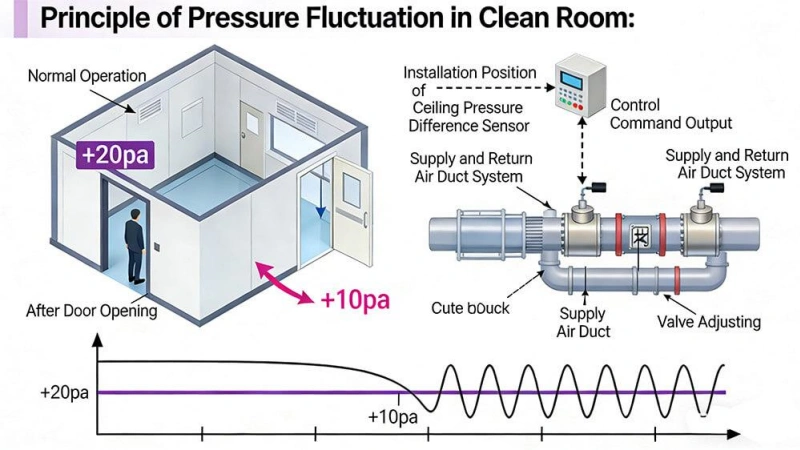
1. Why does an ISO clean room need a suitable damper?
Clean rooms usually maintain a stable clean environment through supply air, return air, exhaust air and pressure difference control. If the air valve has serious air leakage or insufficient adjustment performance, it may cause fluctuations in air supply volume, abnormal room pressure differences, and cross-flow of air between different clean areas.
Therefore, the damper must not only meet the basic air volume adjustment requirements, but also must have stable sealing and control performance.
2. Selection considerations for different ISO cleanliness levels
The higher the ISO cleanroom level, the more stringent the requirements for air cleanliness and environmental stability. However, the air valve is not simply selected one-to-one according to the "ISO grade", but should be determined based on the location of the air valve and the system function.
1. ISO Class 8 clean room
ISO Class 8 clean room has relatively moderate environmental control requirements, and ordinary adjusting dampers can meet some system requirements.
For air supply, return air and exhaust ducts, emphasis should be placed on confirming the adjustment range of the damper, air leakage performance and compatibility with the air volume control system.
2. ISO Class 7 clean room
ISO Class 7 clean room has higher requirements on air flow organization and pressure difference stability.
It is recommended to choose a damper with good sealing performance and adjustment accuracy, especially at the boundary of the clean area, the exhaust system and the pressure difference control position. Air leakage rate and actuator control performance should be considered.
3. ISO 6 and higher cleanliness levels
For ISO 6 and higher clean areas, the system usually requires more stable air flow and pressure difference control.
The air valve should focus on high sealing performance, adjustment accuracy, material cleanliness and long-term operational reliability. For key isolation locations, high-tightness air valves or special clean air valves can be selected according to system requirements.
3. Selection based on the installation position of the damper
Compared with selecting simply based on the cleanliness level, the actual installation position of the damper is more important.
The air supply duct should focus on air volume adjustment and air flow stability; the return air duct should take into account both adjustment performance and clean environment stability; the exhaust duct should focus on sealing performance and preventing the backflow of polluted air.
If the air valve is installed between areas with different cleanliness levels, air leakage and pressure difference control also need to be considered.
IV. Pay attention to the key technical parameters of the air valve
When purchasing a clean room air valve, it is recommended to focus on confirming:
Air valve type and size
Maximum working pressure
Air leakage rate
Adjustment range
Valve body and blade material
Sealing material
Actuator type
Control signal
Working temperature and humidity
Installation method
Cleaning and maintenance requirements
For high-level clean areas, the air valve sealing level and testing standards should be clarified according to project requirements.
5. The actuator also needs to be matched
Clean room dampers do not only need to select the valve body, the actuator also affects the system control effect.
If the air valve needs to be linked with BMS, DDC or clean room automatic control system, the power supply, control signal, torque and feedback signal of the actuator should be confirmed in advance.
For areas with higher pressure differential control requirements, electric actuators with position feedback function can be used to improve system adjustment and monitoring capabilities.
6. Don’t just look at the price of the damper when purchasing
Clean room dampers are important control components of the HVAC system. When purchasing, don’t just compare unit prices.
Tightening performance, adjustment accuracy, materials, actuators, service life and system compatibility should be considered comprehensively. For key projects, suppliers should also be required to provide product technical parameters, air leakage test data and related testing information.
Conclusion
ISO clean room damper selection cannot be simply understood as "the higher the cleanliness level, the higher the damper level", but should be comprehensively selected based on ISO cleanliness level, installation location, system pressure, air volume control method and pressure difference requirements.
For projects that require clean room air valve selection, customization and bulk purchasing, Jiangsu Yueboyang Purification Equipment Co., Ltd. can make technical selections based on clean room levels, HVAC system parameters and on-site installation conditions, and provide regulating air valves, high-tightness air valves, clean room special air valves and related actuator supporting products to meet the air volume adjustment, pressure difference control and sealing needs of different clean areas, and provide complete air valve product supporting support for clean room HVAC systems.


