
Laboratory air purification systems need to be specifically designed based on the type of laboratory, nature of pollutants, number of personnel and safety requirements. Reasonable air filtration, fresh air, exhaust air and pressure difference control can not only improve indoor air quality, but also reduce the risk of pollutant diffusion and ensure the stable operation of the experimental environment.
1. Clarify laboratory air purification requirements
There are obvious differences in the air purification requirements of different laboratories. General R&D laboratories mainly control dust and particulate matter; chemical laboratories need to focus on harmful gases and volatile pollutants; biological laboratories pay more attention to pollution control, air flow direction and regional pressure difference.
Laboratory functions, cleanliness levels, air changes, temperature and humidity, pressure difference, and main pollutant types should be clarified before design.
2. Reasonable design of fresh air and exhaust systems
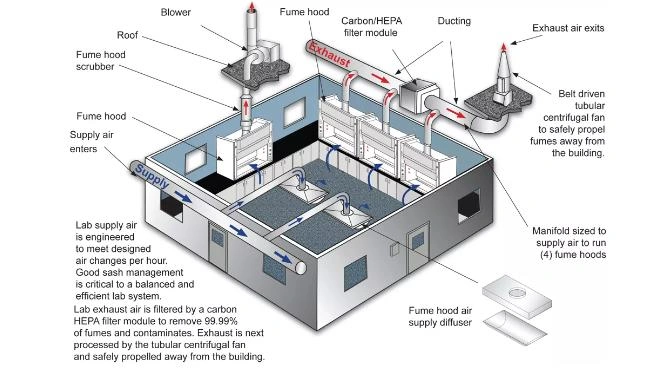
Laboratory air purification cannot rely solely on filters, but also requires the establishment of reasonable fresh air and exhaust systems.
For laboratories with pollutants, an independent exhaust system should be set up according to safety requirements to prevent contaminated air from entering other areas. The fresh air volume should be determined based on the number of personnel, equipment heat dissipation and experimental operation requirements.
For laboratories that require negative pressure control, a stable indoor negative pressure should be established through the difference between supply and exhaust air volumes.
3. Use reasonable multi-stage filtration
Laboratory HVAC system can be configured with different filtration levels according to air quality requirements.
The primary-efficiency filter mainly intercepts larger particles and protects the air-conditioning box and rear-end filters; the medium-efficiency filter further reduces the particle load; for experimental areas with higher cleanliness requirements, HEPA filters can be used for terminal high-efficiency filtration.
Different filtration levels should be configured according to actual needs to avoid unnecessary system resistance and energy consumption caused by excessive filtration.
4. Select a filtration solution based on pollutants
If the main pollutants in the laboratory are dust and particulate matter, the filtration efficiency and dust holding capacity of the particulate matter should be considered.
For areas where there are odors or some gaseous pollutants, adsorption materials such as activated carbon can be added according to the type of pollutants.
It should be noted that ordinary particulate matter filters are mainly used to filter particulate matter and cannot simply replace treatment equipment designed for specific gaseous pollutants.
5. Focus on controlling HEPA filter performance
For laboratories that require HEPA filtration, the filtration level, rated air volume, initial resistance, final resistance and test standards should be clearly defined.
When purchasing, you should also pay attention to the overall sealing performance and leak detection requirements of the filter. Even if the filter material has high filtration efficiency, if the installation is poorly sealed, bypass leakage may occur, affecting the actual purification effect.
6. Strengthen pressure difference and airflow organization control
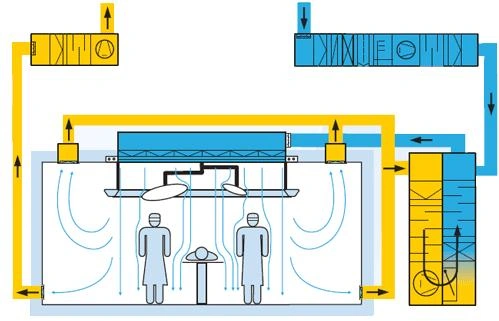
There may be different air control requirements between different areas of the laboratory. By properly setting up the air supply, return air and exhaust systems, and cooperating with adjusting dampers or VAV dampers, the air flow direction and room pressure difference can be controlled.
For areas that require negative pressure control, ensure that air flows from relatively clean areas to areas with higher pollution risks to reduce the outward spread of contaminated air.
7. Establish a filter maintenance and management system
During use, the filter will gradually accumulate dust and the resistance will continue to increase. If it is not replaced for a long time, it may cause the air volume to decrease and the fan energy consumption to increase.
It is recommended to judge the operating status of the filter through pressure difference monitoring, and determine the maintenance and replacement cycle based on the actual resistance, filtration efficiency and usage environment, rather than simply replacing it at a fixed time.
8. Confirm key parameters when purchasing
It is recommended to make clear the following when purchasing laboratory air filters:
Filtration grade, filtration efficiency, rated air volume, initial resistance, final resistance, size, filter material, frame material, sealing method, testing standards and leak detection requirements.
For supporting equipment such as VAV dampers and exhaust systems, parameters such as air volume range, air leakage rate, actuators and control signals should also be confirmed.
Conclusion
The design of laboratory air purification system should focus on overall planning around pollutant control, filtration efficiency, air flow organization, pressure difference stability and safe exhaust. By rationally configuring primary-efficiency, medium-efficiency, HEPA and other filtration equipment, combined with fresh air, exhaust air, dampers and differential pressure control, a more stable and reliable laboratory air environment can be established.
For projects that require laboratory air filter selection, customization and system support, Jiangsu Yueboyang Purification Equipment Co., Ltd. can make technical selections based on laboratory type, cleanliness requirements, design air volume, equipment size and pollutant characteristics, and provide primary-efficiency, medium-efficiency, high-efficiency, HEPA and activated carbon filters. At the same time, it can be equipped with products such as VAV dampers, high-tightness dampers, FFU fan filter units and high-efficiency air supply outlets, providing complete product supporting support for laboratory HVAC air purification systems.


