
Laboratories have high requirements on air flow direction, air exchange frequency, indoor pressure difference and safety, especially chemical, biological and R&D laboratories, which need to continuously control the indoor air environment through HVAC systems. VAV air valve As an important equipment for laboratory variable air volume control, it can dynamically adjust the air supply or exhaust volume according to actual needs, reducing system energy consumption while meeting safety requirements.
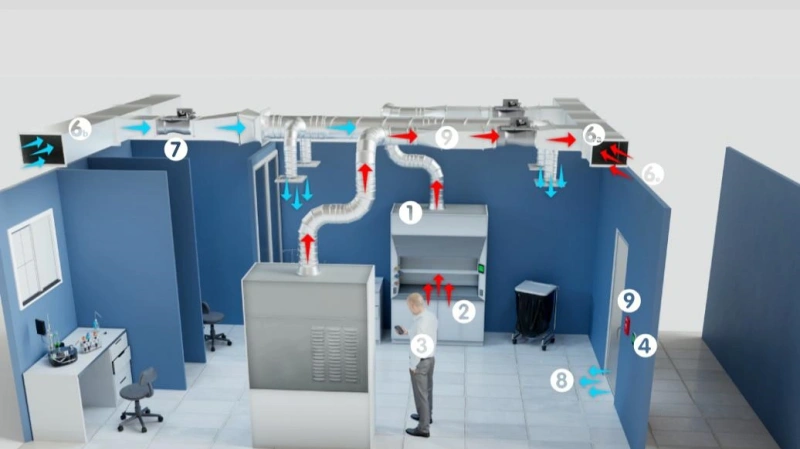
1. Why does the laboratory need a VAV damper?
Traditional constant air volume systems usually operate according to the maximum design air volume. When the laboratory usage status changes, it still needs to maintain a large air supply and exhaust volume, which can easily cause energy waste.
The VAV system changes the air flow by adjusting the opening of the air valve. It can dynamically adjust the air volume according to the laboratory usage status, equipment operation conditions and control requirements, improving the flexibility of the HVAC system.
2. Determine control requirements according to laboratory type
Different laboratories have different requirements for VAV systems.
General R&D laboratories mainly focus on temperature, air quality and comfort; chemical laboratories need to focus on controlling the spread of harmful gases and pollutants; biological laboratories pay more attention to air flow, pressure difference and pollution control.
Therefore, before designing the VAV system, the laboratory functions, number of air changes, design air volume, pressure difference requirements and exhaust requirements should be clarified.
3. Basic control method of VAV damper
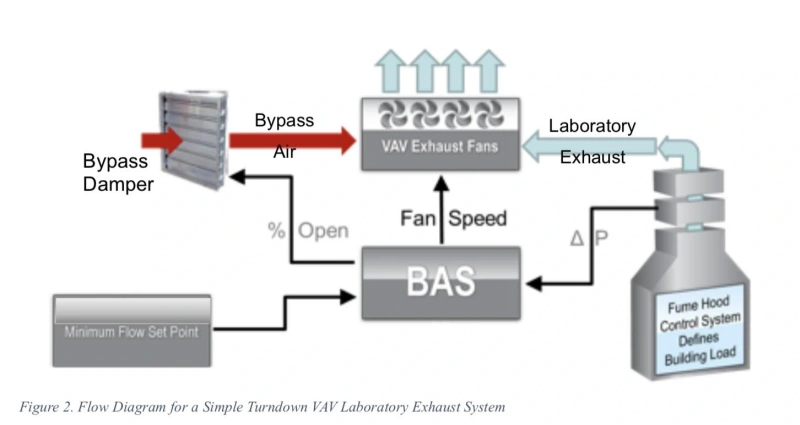
VAV control system usually obtains the laboratory operating status through sensors and controllers, and then sends control signals to the electric actuator to adjust the opening of the damper.
Common control parameters include:
Indoor temperature
Indoor pressure difference
Duct static pressure
Laboratory occupancy status Status
Fume hood operating status
Minimum and maximum air volume
The system dynamically adjusts the air supply and exhaust volumes based on these parameters to maintain the laboratory's design requirements.
IV. Focus on controlling the balance of air supply and exhaust air
When designing the laboratory VAV system, a reasonable relationship between air supply and exhaust air needs to be maintained.
For laboratories that require negative pressure control, the exhaust air volume usually needs to be higher than the air supply volume to allow indoor air to flow into the laboratory and reduce the spread of polluted air to adjacent areas.
Therefore, the VAV control system cannot only control a single damper, but should coordinate the supply VAV damper, exhaust VAV damper and laboratory pressure difference control.
5. Linkage control with fume hood
In chemical laboratories, fume hoods are important local exhaust equipment.
When the fume hood is opened or the operating height changes, the system can adjust the VAV air valve according to the actual exhaust demand so that the exhaust volume meets safety requirements.
By linking the fume hood with the VAV system, the traditional constant air volume system can avoid maintaining the maximum exhaust volume for a long time, and reduce the energy consumption of fans and air conditioners while meeting laboratory safety requirements.
6. Selection of actuator and control system
VAV air valve should select the appropriate actuator according to the air volume range, air duct size and working pressure.
If you need to connect to a BMS or laboratory-specific control system, you should also confirm parameters such as control signals, power supply methods, response speed, position feedback, and communication interfaces.
For key laboratories, it is recommended to adopt a control scheme with real-time air volume feedback and fault alarm functions to improve system operation reliability.
7. Set up security protection functions
Laboratory VAV control systems should not only consider energy saving, but also give priority to meeting safety requirements.
The system can set up functions such as high and low air volume alarms, abnormal pressure difference alarms, damper failure alarms, and exhaust system failure interlocking according to project requirements.
When key equipment fails, corresponding emergency controls should be implemented in accordance with laboratory safety policies to avoid the spread of contaminants.
8. Parameters that need to be confirmed in design and procurement
When purchasing laboratory VAV air valves, it is recommended to clarify:
Air valve size, minimum air volume, maximum air volume, working pressure, air leakage rate, adjustment accuracy, actuator torque, control signal, air volume feedback, pressure difference requirements and alarm function.
For special laboratories, system parameters such as room pressure difference, number of air changes and exhaust equipment should also be provided.
Conclusion
The laboratory VAV damper control system should focus on safety control, air volume balance, pressure difference stability and energy-saving operation. Through the collaboration of VAV dampers, sensors, controllers, actuators and BMS systems, the air flow can be dynamically adjusted according to the actual operating status of the laboratory to avoid unnecessary high air volume operations.
For projects that require laboratory VAV damper selection, customization and bulk purchase, Jiangsu Yueboyang Purification Equipment Co., Ltd. can make technical selections based on laboratory type, design air volume, air duct size, pressure difference requirements and control methods, and provide supporting products such as VAV dampers, high-tightness dampers, regulating dampers and electric actuators to provide complete damper product support for laboratory HVAC and air control systems.


