
HVAC dampers are important control components in air handling and ventilation systems. They are mainly used to regulate, cut off, distribute and isolate air. For engineers and buyers, the damper is not a simple "switch". Its size, leakage level, actuator, material and control method will affect the air volume balance, pressure difference control and operational stability of the entire HVAC system.
Therefore, when purchasing air valve, the selection should be based on the installation location, air volume, pressure, temperature, air tightness requirements and control method, rather than determining the product only based on the air duct size.
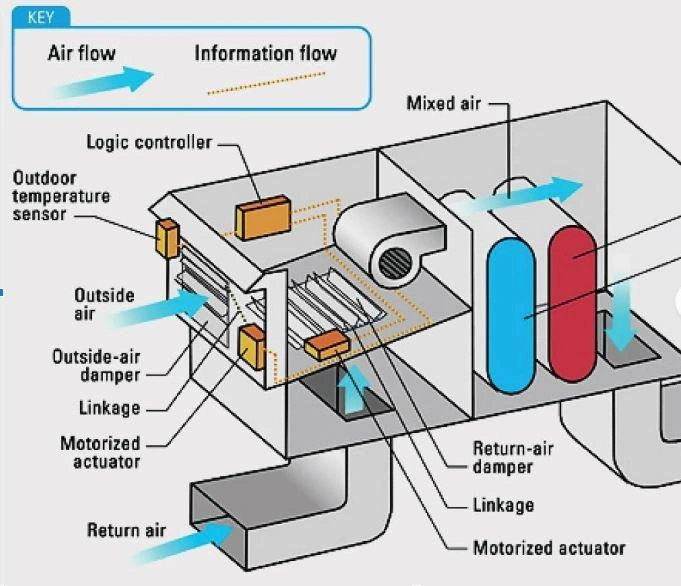
1. Why do HVAC systems need dampers?
In a complete HVAC system, different areas have different requirements for air volume, pressure and air flow direction. The air valve is mainly responsible for the following functions:
Air volume adjustment:
By adjusting the opening of the valve plate, the air supply, return air or exhaust volume is controlled to achieve a balance of air volume in each area.
Regional pressure control:
By adjusting the air inlet and exhaust volume, the required positive or negative pressure can be maintained in clean rooms, laboratories, hospitals and other areas.
Air isolation:
Cut off the air flow during equipment maintenance, system shutdown or zone switching to reduce air exchange between different zones.
Fire protection and smoke exhaust:
Fire dampers and smoke exhaust fire dampers can be used in building fire protection zones and fire smoke exhaust systems.
Therefore, the damper selection needs to match the design parameters of the entire HVAC system.
2. Common HVAC damper types and applications
Different dampers have different structures and functions, and engineers should choose based on actual usage scenarios.
| Air valve type | Main purpose | Key selection factors |
|---|---|---|
| Adjusting air valve | Adjusting air supply, return air and exhaust air | Air volume, pressure drop, size |
| Electric adjustment Air valve | Automatically adjust air flow | Actuator, control signal |
| Return air valve | Prevent air backflow | Wind speed, opening resistance |
| High air-tight air valve | Air isolation and pressure difference control | Leakage rate, sealing performance |
| Fire damper | Prevent the spread of flames and high temperature air | Fire protection grade, operating temperature |
| Fire smoke exhaust | Smoke temperature, fire protection requirements | Exhaust temperature, fire protection requirements |
| Clean room damper | Clean area Air volume and pressure control | Air tightness, material, cleanliness requirements |
| VAV damper | Adjust regional air volume according to demand | Air volume range, control accuracy |
When purchasing, you should first determine the function and use position of the air valve, and then determine the size and other parameters.
3. How to choose dampers for different application scenarios?
General commercial HVAC systems
General ventilation and air conditioning systems such as office buildings, shopping malls, hotels, etc. usually focus on air volume adjustment, pressure loss, size and actuator configuration.
If automatic building control is required, you can choose a regulating damper with an electric actuator.
Clean room
A clean room not only needs to control the air volume, but also needs to maintain the pressure gradient between different areas.
Therefore, we should focus on:
Air tightness
Leakage rate
Air volume adjustment accuracy
Material cleanliness
Actuator control method
For high cleanliness environments, it is not recommended to select only ordinary ventilation dampers.
Hospitals and isolation areas
Hospital clean areas, isolation areas and other places where air flow direction needs to be controlled have higher requirements for air tightness and control performance of air valves.
Engineers need to consider at the same time:
Air supply volume + exhaust volume + room pressure + damper air tightness + automatic control
Especially in areas where negative pressure needs to be maintained, the damper should be linked with the exhaust system, pressure sensor and control system.
Laboratory
Laboratory ventilation systems usually require large exhaust volumes and stable pressure control.
Key points to confirm when selecting:
Maximum air volume
Minimum air volume
Working pressure
Air tightness
Chemical environment
Actuator control
Fault status
Fire protection partition
If the damper is installed in the fire partition, the corresponding fire damper or smoke exhaust fire damper should be selected according to the building fire protection design requirements, and ordinary regulating dampers cannot be used instead.
4. How should the air valve size be determined?
The damper size usually needs to match the air duct size and design air volume.
It is recommended to confirm before purchasing:
Duct size → Design air volume → Wind speed → Working pressure → Damper pressure drop
If the damper size is too small, it may cause:
Wind speed is too high
Increased pressure loss
Increased system noise
Increased fan energy consumption
If the size is too large, it may also lead to an unreasonable adjustment range and affect the control accuracy under low air volume conditions.
Therefore, we cannot simply think that "the air valve will be as large as the air duct is." It also needs to be confirmed based on the design air volume and system pressure.
5. Manual damper or electric damper?
This is a common selection problem in engineering projects.
Manual dampers are suitable for systems that rarely require frequent changes in air volume after debugging. They have simple structures and relatively low costs.
Electric dampers are suitable for systems that require automatic control and can be used with:
BMS
HVAC control system
Temperature sensor
Pressure differential sensor
Air volume sensor
for linkage.
If the project requires automatic adjustment based on indoor pressure, temperature or air volume, it is recommended to determine the actuator and control method during the design stage rather than adding electric actuators later.
6. What parameters need to be confirmed when purchasing HVAC dampers?
When buyers inquire from manufacturers, it is recommended to provide at least the following information:
| Parameters | Purchase confirmation content |
|---|---|
| Air valve size | Width × Height or diameter |
| Design air volume | m³/h, CFM, etc. |
| Working pressure | System static pressure/working pressure |
| Working temperature | Normal and maximum temperature |
| Air valve type | Adjustment, check, airtight, fireproof, etc. |
| Material | Galvanized steel plate, stainless steel, aluminum alloy, etc. |
| Sealing requirements | Ordinary or high airtight |
| Actuator | Manual/electric |
| Control signal | 0–10V, 4–20mA, switching value, etc. |
| Flange and interface | Determine based on the on-site air duct |
| Installation method | Horizontal, vertical or other |
| Quantity | Total project requirements |
If it is a non-standard air valve, on-site installation drawings or interface dimensions should also be provided.
7. How to judge the quality of air valve?
When purchasing air valves, it is not recommended to only compare product unit prices.
It is recommended to focus on comparing the following indicators:
① Air tightness
For clean rooms, laboratories and pressure control systems, air tightness directly affects the system control effect.
② Pressure loss
Excessive pressure drop will increase the fan load and operating energy consumption.
③ Adjustment performance
For systems that need to adjust the air volume, attention should be paid to the valve plate structure and actual adjustment range.
④ Actuator reliability
The automatic control system should confirm the actuator torque, control signal, power supply and fault status.
⑤ Material and processing quality
Select galvanized steel plate, stainless steel, aluminum alloy or other materials according to the environment.
⑥ Product testing and quality documents
When purchasing engineering projects, manufacturers can be asked to provide relevant testing data, product specifications and quality documents.
8. What project information is recommended to be provided to the manufacturer before purchasing?
In order to avoid size mismatch or incompatible control methods after the product arrives, it is recommended to provide the manufacturer with:
HVAC system diagram
Duct size
Design air volume
Working pressure
Air valve installation location
Room usage
Cleanliness level or pressure requirements
Temperature and humidity conditions
Control system requirements
Actuator specifications
Quantity of items
Installation site dimensions
For projects such as clean rooms, hospitals, laboratories, etc., it is best for engineers and manufacturers to confirm the technical parameters before placing an order.
9. Boyang HVAC damper customization and project matching
Jiangsu Yueboyang Purification Equipment Co., Ltd. can provide a variety of air valve products and customized services for HVAC, clean rooms, hospitals, laboratories and industrial ventilation projects.
According to the air duct size, design air volume, working pressure, air tightness requirements, installation conditions and control methods provided by the customer, the air valve specifications and actuator can be matched.
The product can be configured with different box materials, valve plate structures, sealing methods, interface sizes and manual or electric actuators according to project requirements, and can be matched with air filters, clean room air supply equipment and other HVAC products.
For engineering projects and bulk purchases, it is recommended to provide complete technical parameters and installation requirements during the inquiry stage so that manufacturers can make selections based on actual working conditions instead of just quoting based on standard sizes.


