
While people are paying attention to HEPA high-efficiency filters, FFU fan filter units and air conditioning units, high-tightness dampers are also an indispensable and important component of clean room HVAC systems. It is not only responsible for regulating the air volume, but also plays an important role in maintaining pressure difference, preventing cross-contamination, ensuring cleanliness and reducing energy consumption. If the air valve sealing performance is insufficient, even if the filtration system has excellent performance, it will be difficult to meet the clean room design requirements.
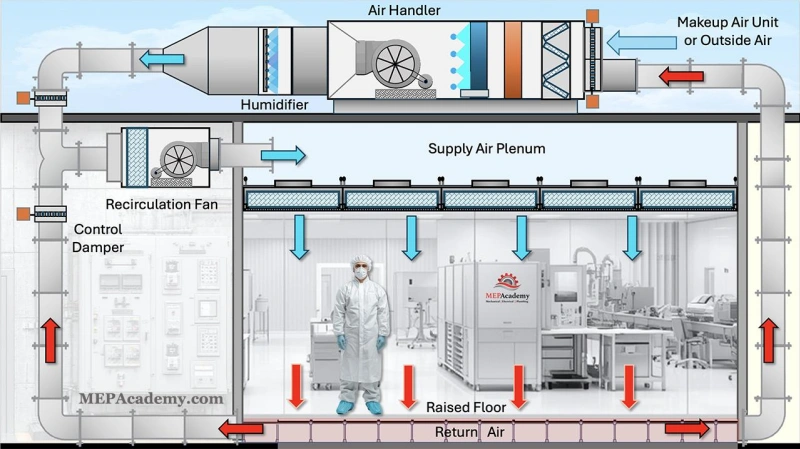
What is a high-tightness damper?
High-tightness damper is an HVAC air volume control device with ultra-low air leakage rate. Compared with ordinary regulating dampers, it adopts a more precise blade structure, high-performance sealing materials, reinforced frame and higher processing accuracy, which can minimize air leakage even in the closed state.
Depending on different project requirements, its air leakage performance can usually meet EN 1751 Class 4, AMCA related standards or special technical specifications of clean room projects.
Why must high-tightness dampers be used in clean rooms?
1. Maintain a stable clean room pressure difference
One of the most important control parameters in a clean room is the pressure difference between rooms.
For example:
Pharmaceutical clean workshops usually maintain positive pressure to prevent external contaminants from entering.
Biological safety laboratories and isolation wards need to maintain negative pressure to avoid the leakage of harmful substances.
Semiconductor factories rely on multi-stage pressure difference control to achieve air isolation between different clean areas.
If the air leakage of the air valve is too large, it will lead to unstable pressure difference, which not only affects the cleanliness, but may also cause product contamination or even process failure.
2. Prevent cross-contamination
Different clean areas undertake different production tasks. Once the air circulates between each other, it may cause:
Dust particles
Microbes
Chemical volatiles
Hazardous gases< /p>
Process pollutants
High-tight air valves can effectively isolate each air supply and exhaust area and prevent air cross-flow, thereby reducing the risk of cross-contamination and ensuring that different clean areas maintain an independent and stable environment.
3. Ensure the cleanliness level of the clean room
Clean rooms are usually classified according to the ISO 14644 standard.
Whether it is ISO Class 5, ISO Class 6, or a higher level clean environment, the HVAC system is required to accurately control the air supply volume and air flow organization.
Ordinary air valves have large air leakage, which will disrupt the designed air flow and reduce the actual filtration effect of the HEPA filter, making it difficult for the clean room to maintain the designed cleanliness level for a long time.
4. Improve energy efficiency
Air valve leakage means that the HVAC system needs to increase the fan speed or increase the air supply volume to make up for the air loss.
The use of high-tightness air valves can:
Reduce fan operation energy consumption
Reduce cooling and heating loads
Improve the overall efficiency of the air conditioning system
Reduce long-term operating costs
Meet green building and energy-saving design requirements
For large clean factories that operate 24 hours a year, the energy-saving effect is particularly obvious.
5. Improve the air volume balance accuracy of the HVAC system
Each area of the clean room needs to obtain the air supply volume specified in the design.
High-tightness dampers have more precise adjustment performance and can achieve:
More precise air volume control
More stable system balance
Shorten system debugging time
Maintain long-term stable operation
For large clean projects with multiple air conditioning units and complex air duct systems, high-tightness dampers can significantly improve system control accuracy.
Typical application fields
High sealing dampers are widely used in:
Semiconductor wafer manufacturing plant
Pharmaceutical and biopharmaceutical workshop
Biological laboratory
Hospital operating room
Medical clean room
Food processing clean workshop
p>
Precision electronic manufacturing factory
New energy battery production workshop
Data center constant temperature and humidity computer room
The main design features of high-tightness dampers
A high-performance clean room damper usually has the following characteristics:
High-precision aluminum alloy or galvanized steel blades
Multi-layer sealing strip design
Ultra-low air leakage blade structure
Reinforced frame
Anti-corrosion surface treatment
Stainless steel connectors
Flexible opening and closing, stable operation
Supports manual and electric actuators
Optional position feedback and intelligent control interface
For key clean projects, air leakage testing is usually required before installation to ensure that the design requirements are met.
How to choose a suitable high-tightness damper?
In the design process of clean room HVAC system, the following factors should be mainly considered:
Air leakage level requirements
Clean room pressure difference requirements
Air volume size
Air duct size
Operating temperature and humidity
Anti-corrosion performance
Actuator type
Whether it is necessary to connect to the BMS building automation system
Convenience of later maintenance
Rational selection can not only improve the operational stability of the clean room, but also reduce the life cycle cost of the entire system.
Conclusion
High-tightness dampers are key equipment in modern clean room HVAC systems. By reducing air leakage, it helps clean rooms maintain a stable pressure difference, prevent cross-contamination, ensure cleanliness levels, optimize air flow organization, and improve energy efficiency.
Whether it is used in semiconductor manufacturing, biopharmaceuticals, hospital operating rooms or high-level laboratories, the use of high-quality, low-air-leakage high-tightness air valves can effectively improve the reliability, safety and long-term operating performance of the clean environment, and is an indispensable and important component in building high-standard clean rooms.


